INFO 1300: User Research -- User Interviews
Class 16: User Research – User Interviews
- Review: Additional Responsive Considerations
- Overview: Project
- Understanding your Site's Audience
- Selecting an Audience
- User Interviews
- Writing Effective Interview Questions
Copyright 2026, Kyle J. Harms
Review: Media Queries for Responsive Design
(pointer: coarse)or(pointer: fine)Adjust the size of interactive elements for touch vs. mouse input.(prefers-color-scheme: dark)Switch to a dark theme for better visibility in low-light environments.(prefers-reduced-motion: reduce)Minimize non-essential motion and animation.(prefers-contrast: more)or(prefers-contrast: less)Increase or decrease contrast for better readability.
Review: Responsive Images
<picture>
  <source srcset="images/mcgraw-tower-portrait.jpg" media="(min-width: 500px)">
  <img src="images/mcgraw-tower-landscape.jpg" alt="McGraw Tower">
</picture>
</exam2>
<project>
Project
Design and code an original, ambitious, usable, and accessible responsive static 3–5 page interactive website from scratch designed for a cohesive audience with substantial content (primarily text).
- Any topic of your choosing.
- 4 milestones: each milestone assigned on Monday (after class) and due the following Monday at 11:59pm.
This is an opportunity to demonstrate your mastery of front-end web design and development and showcase your creativity in a portfolio-worthy website.
Project, Milestone 1: User Research & Design
- Identify a topic for your website.
- Conduct user research (user interviews) to identify a cohesive audience and their goals.
- Identify website content to address audience goals.
- Design (sketch) a responsive website (narrow and wide).
Expected workload: Significantly higher than the non-project part of the semester. (NYS requires 8 hours/week outside class for a 4-credit course.)
Activity: Project Topic Brainstorm
With a peer, brainstorm possible topics for your website.
Project Requirements:
- Your website must be original and created from scratch.
- Your website must have substantial content (primarily text).
- Your website must be designed for a cohesive audience.
User-Centered Design
Review: Designing a Website
- Identify the website's audience by their goals. (Not your goals.)
- Assemble/create content to address the audience's goals.
- Organize content into web pages. (Websites have multiple pages.)
- Plan the website's design.
- Evaluate the site's design. Does the website address the audience's goals?
User-Centered Design
An iterative design process in which designers focus on the users and their needs in each phase of the design process.
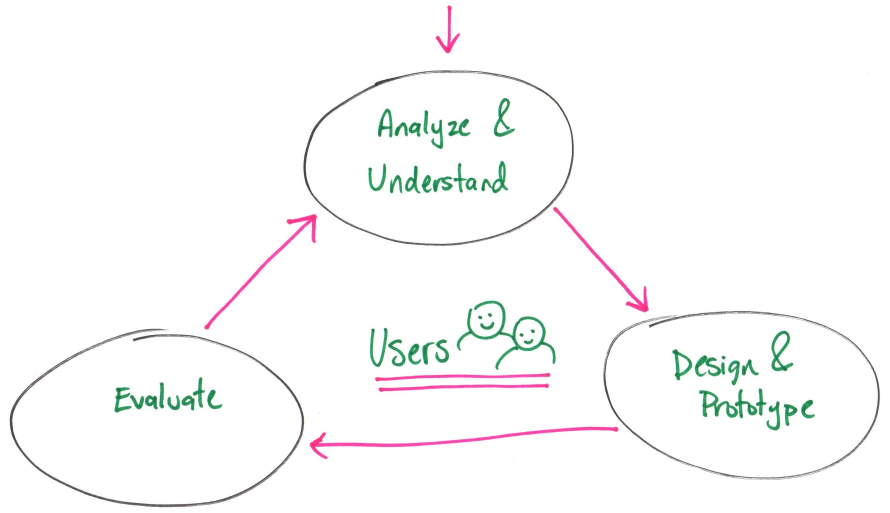
Project Goals: User Centered Design
Employ the user-centered design process to design and evaluate a website.
- Analyze & Understand ➞ User Interviews
- Design & Prototype ➞ Card Sorting, Sketches
- Evaluate ➞ User Testing

User Research – User Interviews
Understanding Your Site's Audience
What We Want
- Who is the site's audience?
- What are their goals for using the site?
- What problem does the website solve for the users?
How We Figure It Out
❌ Surveys/Questionnaires† ❌ Focus Groups†
✅ User Interviews ✅ Field Studies (INFO 3450)
† Tempting, but deceptive: without expertise and validation, the results often reflect the UX engineer's own biases.
User Research – User Interviews
User Research
The data collection and analysis activities necessary to characterize the users, their tasks, and the context of use before product (website) development begins.
User Interviews
A method for conducting user research. User interviews follow a structured methodology whereby the interviewer prepares a number of topics to cover, makes a record of what is said in the interview, and systematically analyzes the conversation after the interview.
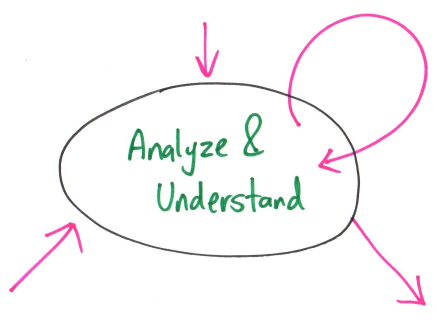
User Research is an Iterative Process
You may need to conduct several rounds of user interviews.
Conduct as many rounds as necessary until you have identified a cohesive audience.
Review: Cohesive Audience
Cohesive $=$ The group shares common goals for interacting with the website.
If a group has different goals, then they are not an audience.
Tip: Can you identify other groups that have the same goals as your "audience"? If yes, then your audience might be too specific. If not, then you might have a cohesive audience.
Gotcha: Do not simply pick an audience!
❌ If you simply pick an audience, you are speculating about that group and assuming their goals are uniform.
✅ Conduct user research (user interviews) to identify a cohesive audience.
How do you know if your audience is cohesive? The users of that audience should have relatively uniform/consistent goals. Describe your audience in terms of these goals!
Activity Setup: Audience Selection
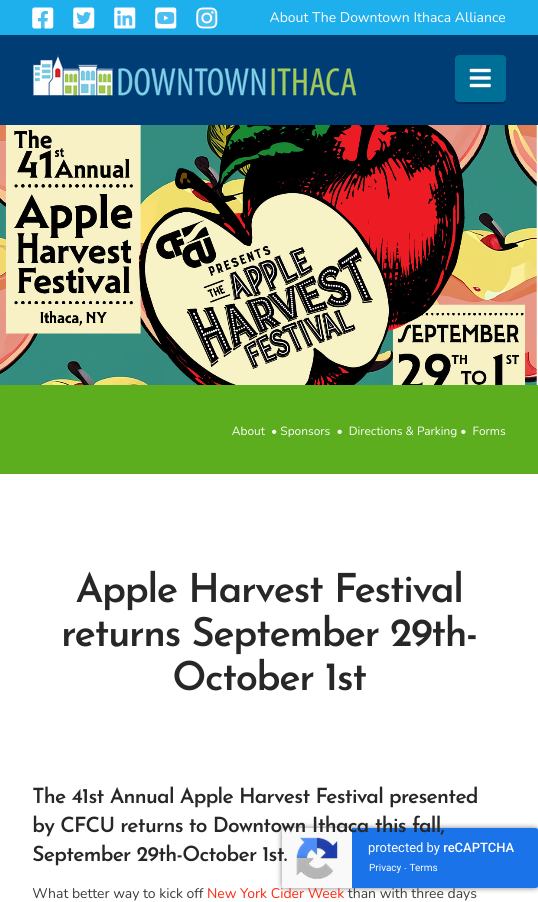
Imagine you are designing the website for the Ithaca Apple Harvest Festival.
Who's the primary audience for this website?
Activity: Audience "Selection" Reflection (Part I)
- Reflect on "Cornell Students" as the primary audience for the Apple Harvest Festival website.
- Discuss with a peer the following:
- What are this audience's goals?
- What content will they need to address these goals?
- Are there other people that are not Cornell students with similar goals?
Activity: Audience "Selection" Reflection (Part II)
- Reflect on "Ithaca College Students" as the primary audience for the Apple Harvest Festival website.
- Discuss with a peer the following:
- What are this audience's goals?
- What content will they need to address these goals?
- How are these goals different compared to "Cornell Students"?

Discussion: Cornell vs. Ithaca College Students
How do their goals differ for attending the Apple Harvest Festival?
How might we describe an audience with these goals?
A Cohesive Audience Has Uniform Goals
Audience Goals
- Date/time of festival
- Location of festival
- Cost of attending
- Transportation options to festival
- What you can do at the festival
- Available food options
- Do I need cash?
- ...
Audience
Cornell StudentsIthaca College Students- ⬅ These Goals!
Do the goals change if the audience is out-of-town visitors/tourists? Probably
Gotcha: Identity $\neq$ Audience
Label your audience in terms of their goals, not their identity.
Example: Goals
- Determine festival date/time
- Identify transportation options
- Find food options
Example: Identities
Cornell studentsFirst-year Cornell students living on North campusIS majors
Recruiting Interview Participants
If you don't have access to the right people to interview, find people that are similar.
Example: You may want to design a website to help you get a job. You might want to interview hiring managers in tech. But you may not have access to anyone in that role to interview.
Instead, you might interview people that have hired someone before. You might interview people that are recently hired (like recent graduates).
It's not perfect, but it will help you get started.
Gotcha: Who Not to Interview
While convenient (and less anxiety inducing), your friends, family, and peers will likely not provide you with the information you need.
Social Desirability Bias:
People who care about you want you to succeed. They may soften criticism, provide unwarranted praise, and say they would do something they never would. (This is probably also true of many chatbots too.)
User Interviews
Conducting User Interviews
- Plan interview questions
- Practice/pilot interview
- Recruit participants
- Obtain consent to interview
- Interview users
- Analyze interview data – are the goals relatively uniform?
- If necessary, conduct another round of user interviews
Conducting User Interviews
- Plan interview questions
- Practice/pilot interview
- Recruit participants
- Obtain consent to interview
- Interview users
- Analyze interview data – are the goals relatively uniform?
- If necessary, conduct another round of user interviews
Ineffective Interview Questions
-
Avoid leading questions.
What information did you find most useful from the existing website?
➞ Assumes that some information is useful.
-
Avoid asking the participant to speculate.
How do you typically/usually go downtown?
➞ Humans are bad at speculating. Ask them how they did x today.
-
Avoid asking users what they want.
Do you want information on parking?
➞ Users don't know what they want. Explore their behavior instead.
Ineffective Interview Questions
-
Avoid closed questions (yes/no answer).†
Do you have a car?
➞ Closed questions don't provide information. Provide space to talk.
-
Avoid asking design related questions.
Should there be a navigation bar or menu?
➞ You're the designer! That's your job. Don't ask design questions!
† A closed question is okay if you've planned an open follow-up question. (e.g., "Yes" ➞ "Tell me about the last time you drove downtown.")
Effective Interview Questions
-
Ask participants to recall specific events/memories.
Recall the last festival or community event you attended. Tell me a bit about it.
-
Ask follow-up questions.
I see, you visited Porchfest this year. Tell me how you learned about it?
Tip: Did the participant say something interesting? Follow-up!
-
Keep questions neutral.
Describe any challenges you faced at Porchfest.
Activity: Interview Question Critique
Evaluate the following user interview questions as: good, okay, or bad
- Recall the last festival you attended. What was your approach for deciding what to do? Good
- Should the site have a map page? Bad
- Would you use a website about the festival? Bad
- Would you like parking information? Bad
- Did you seek out information about the festival before arriving today? If so, recall specifically what you were looking for? Good
- What information do you usually need to visit a festival? Bad
Activity: User Interview Question Practice
Compose 3 or 4 user interview questions on your handout for conducting user research about the Apple Harvest Festival website.
Tip: Ask participants to recall specific events/memories.
Don't ask participants to speculate (i.e. "usually", "typically", etc.)
Example Questions:
- Walk me through the last time you purchased a laptop.
- How did you decide which laptop to buy?
Activity: Evaluate the Interview Questions
With a peer, take turns evaluating each other's interview questions. For each question, ask each other the following:
✔️ Is the question neutral? ❌ Is the question leading? ❌ Is the question closed (i.e. yes/no)? ❌ Does the question ask the user to speculate (i.e. "usually", "typically")? ❌ Does the question ask the user what they want? ❌ Is the question asking about the site's design?
Conducting User Interviews
-
Plan interview questions.
-
Practice/pilot interview.
-
Recruit participants.
-
Obtain consent to interview.
Required: Obtain informed consent before any user interview.
-
Interview users.
Required: Take thorough notes. You will need these for analysis.
-
Analyze interview data – are the goals relatively uniform?
-
If necessary, conduct another round of user interviews.
Recruit Participants & Obtain Consent
Hi, I am a student at Cornell University.
I'm currently taking a class on web design and for a project, I am designing a website about the Apple Harvest Festival.
I'm trying to learn more about the people that might use this site. May I ask you a few questions? It will take about 10 minutes. You are free to quit at any time.
Activity: Practice recruiting a participant with a peer.
Gotcha: Do Not Recruit Friends or Family
It's okay to pilot (test) your interview questions with friends, family, or your peers.
However, using friends, family, or peers as your actual interview participants will likely bias your results.
Skill: Recruiting participants is an important skill for UX engineers. (It's also one that AI cannot easily replace.)
Interviewing Users
-
Ask each question and follow-up with additional questions if participant says something interesting.
-
Take thorough notes during the interview.
Don't record the interviews. Recording may change the behavior of the participants.
It also requires additional consent (and other legal considerations).
-
Thank your participant.
Friday Sections: User Interview Prep
Instead of a practice quiz you will prepare for your project's user interviews.
You will work with your peers to prepare and pilot your user interview questions.
No credit is provided for attendance. However, having peers available to pilot your interview questions is a valuable resource.
What's Next
Friday Sections (10/23): Project, User Interview Prep (no quiz)
Project, Milestone 1 due Monday (10/26)