Speaker: Jevin West, University of Washington
Title: Mitigating Knowledge Collapse through Epistemic Diversity
Time: 3-4 p.m.
Date: Nov. 4, 2026
Location: Computing and Information Science Building, Room 250
Click here to attend via Zoom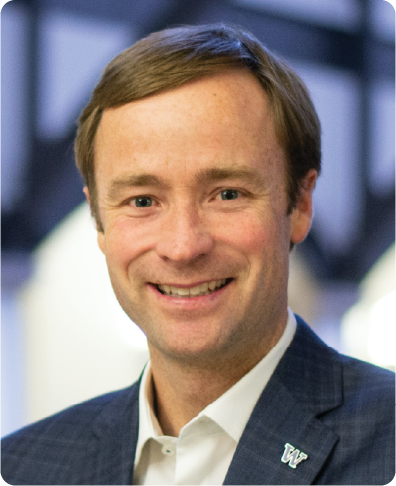
Abstract: A growing percentage of online content is AI-generated. This has consequences for science and society but also for future versions of the machines trained on this content. There is growing concern, for example, of knowledge collapse—a degradation in both diversity and accuracy of information, a kind of “data inbreeding." Prior work has demonstrated single-model collapse when a model is trained on its own output. I will extend beyond a single model in this talk. Inspired by ecology, I will ask whether AI ecosystem diversity, that is, diversity among models, can mitigate such a collapse. Through a set of experiments, I will show that increased epistemic diversity mitigates collapse, but, interestingly, only up to an optimal level. In the context of AI monoculture and narrowing feedback loops, the results highlight the important role of data and model diversity in these co-evolving, human-AI systems.
Bio: Jevin West is a Professor and the Associate Dean for Research in the Information School at the University of Washington. He is the co-founder and the inaugural director of the Center for an Informed Public at UW, where he studies online rumors, misinformation, and their impact on scientific discourse. His research and teaching examine the changing role of data and technology on democratic and scientific discourse. He has written about trust in science, the benefits and dangers of conversational agents, the role of recommender systems in mediating what we see and what we don’t, the impact of AI on the publishing system, and the role of expertise in online communities. He is the co-author of the book, “Calling Bullshit: The Art of Skepticism in a Data-Driven World,” which helps non-experts question numbers, data, and statistics without an advanced degree in data science. He has given keynotes around the world and his work has been featured in The New Yorker, The Economist, Washington Post, NPR, BBC, Nature, and Science.

