

Speaker: Gili Vidan, Assistant Professor of Information Science, Cornell Bowers
Title: "The Most Important 5/8ths Inch in Banking": Locating Trust in the History of Computing
Time: 3-4 p.m.
Date: August 26, 2026
Location: Computing and Information Science Building, Room 350 (Talk will also be broadcast to BLM 398 on the Cornell Tech Campus)
Abstract: In 1966, bankers pleaded with the American public to stop confusing their computers. Over the past decade, banks had begun supplying their retail customers with new kinds of preprinted checks featuring a string of “funny looking numbers” near the bottom. The numbers were legible to the human eye, clearly recognizable as Arabic numerals, but still had an alien feel to them. The human customer was not the only intended audience for this novel typeface: the numbers were designed to be read by computers. The computer's confusion arose when bank customers wrote over the preprinted numbers by hand, encoding information by humans, for humans. This talk examines the computerization of retail banking check-processing operations in the 1950s and 60s as a site for the remaking of trust in the age of computing. The talk then connects insights from the study of this historical episode to contemporary concerns over disclosure and transparency of AI-generated media. It concludes with a broader discussion of the use of historical analysis in AI assessment.
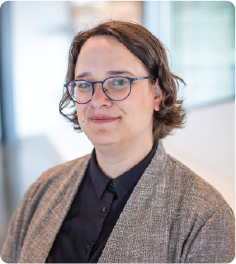
Bio: Gili Vidan is a historian of technology who studies how institutions in the United States came to place their trust in computing. She is an assistant professor in Information Science at Cornell Bowers and member of the STS graduate field and Media Studies graduate minor field. Vidan's work examines how shifts in abstract political notions such as trust and good governance are made concrete and transformed through the digital technologies we develop and use. In particular, she focuses on the overlapping ways political, social, commercial, and epistemic values literally materialize in our payment and communication technologies, from automated check-processing to cryptographic signatures and digital watermarking. Her book, Technologies of Trust: The Making of Credibility in Postwar American Computing is forthcoming with MIT Press. At Cornell, she teaches on the social shaping and policy implications of contemporary information technologies and the history of the information society in the U.S.