

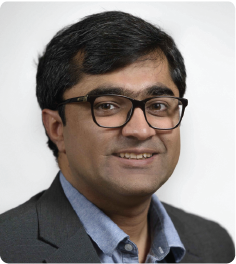
Speaker: Mustafa Naseem, Clinical Associate Professor, University of Michigan, School of Information
Title: Power, Resistance, and AI: Lessons from Designing Health Technologies in the Global South
Time: 3-4 p.m.
Date: May 5, 2026
Location: Computing and Information Science Building, Room 250
Abstract: There is growing enthusiasm for AI-powered health interventions in the Global South, but technology never arrives in a vacuum. It enters systems already shaped by colonial legacies, bureaucratic incentives, and gendered power. Drawing on years of designing and deploying health technologies in Pakistan, from immunization information systems to paternal health communication platforms, this talk examines how technology gets repurposed for surveillance and control by those in power, and how marginalized communities resist. I trace a through-line from colonial-era bureaucratic logics that persist in today's digital health infrastructure, to gendered power dynamics that shape maternal health decision-making. I argue that the people we design for are not powerless; they exercise agency through micro acts of resistance, and that good design must account for this. Looking ahead, I ask whether AI-driven conversational agents can facilitate genuine attitude and behavior change, particularly among men around gender norms, while confronting an uncomfortable question: if these tools can persuade people toward good, what prevents the same technology from being weaponized to manipulate and harm?
Bio: Mustafa Naseem is a Clinical Associate Professor at the University of Michigan School of Information. His research examines how technology can democratize information access and agency for marginalized communities, particularly low-literate populations and women across South Asia. His work in Pakistan has spanned the design of immunization information systems, voice-based interventions to deliver health information, and platforms that engage men in behavior change around gender norms, several of which have reached tens of thousands of people in Punjab. Across these projects, he studies how local power dynamics and colonial legacies shape the way technology is adopted, resisted, and subverted. Prior to Michigan, Naseem directed the Innovations for Poverty Alleviation Lab at Information Technology University, Pakistan, and served as the ICTD Expert in Residence at the ATLAS Institute, University of Colorado Boulder. His research has been supported by the NSF, NIH, Gates Foundation, USAID, and UNICEF, among others. He holds a PhD in Design Science from the University of Michigan and an M.S. from the University of Colorado Boulder, where he was a Fulbright Scholar.