

Date: Thursday, November 19, 2025
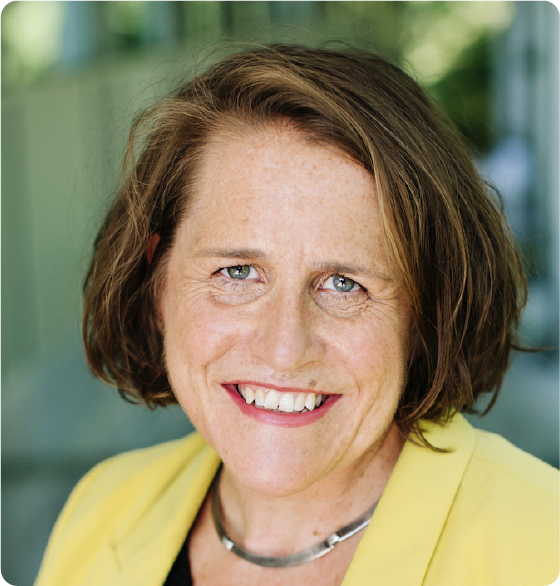
Speaker: Claire Wardle
Title: “What do you know? You’re a robot”: Anthropocentrism, anthropomorphism and defensive stereotypes as strategies to resist AI persuasion
Abstract: The rise of large language models (LLMs) has sparked widespread fascination, as well as concern, about their persuasive potential. Much of the conversation, both in research and the media, has focused on whether these systems work: can they change minds, shape opinions, or shift beliefs? But this focus overlooks an equally important question: what happens when people resist? In this talk, I’ll explore what resistance to AI persuasion looks like in practice, drawing on a study where participants engaged with an LLM designed to challenge a self-selected conspiracy belief. Our analysis revealed that resistance takes many forms, from dismissing the system because it isn’t human, to attributing manipulative or naïve human qualities to it, to casting it as a mouthpiece for “mainstream” or even “malevolent” forces. These reactions tell us as much about the social meaning of AI as they do about its technical capabilities. Understanding resistance matters. It challenges the assumption that persuasive AI is simply a more efficient version of traditional communication and reminds us that failed persuasion can have unintended consequences, hardening mistrust or fueling backlash. As we enter an era where machines increasingly attempt to shape our beliefs, we must ask not just how they persuade, but how people push back and what that pushback reveals about human agency and trust in an age of Generative AI.
Bio: Claire Wardle is an Associate Professor in the Department of Communication at Cornell University. She is considered a leader in the field of misinformation, verification and user generated content. In 2015, Claire co-founded the non-profit First Draft, a pioneer in innovation, research and practice in the field of misinformation. She went on to co-found the Information Futures Lab at Brown University’s School of Public Health. Over the past decade she has developed an organization-wide training program for the BBC on eyewitness media, verification and misinformation, led social media policy at UNHCR, been a Fellow at the Shorenstein Center for Media, Politics and Public Policy at Harvard’s Kennedy School, and been the Research Director at the Tow Center for Digital Journalism at Columbia University’s Graduate School of Journalism. She has authored a number of articles and reports, including Information Disorder: An interdisciplinary Framework for Research and Policy for the Council of Europe and A Conceptual Analysis of the Overlaps and Differences between Hate Speech, Misinformation and Disinformation for the United Nation’s Department of Peace Operations. She holds a Ph.D. in Communication from the University of Pennsylvania.