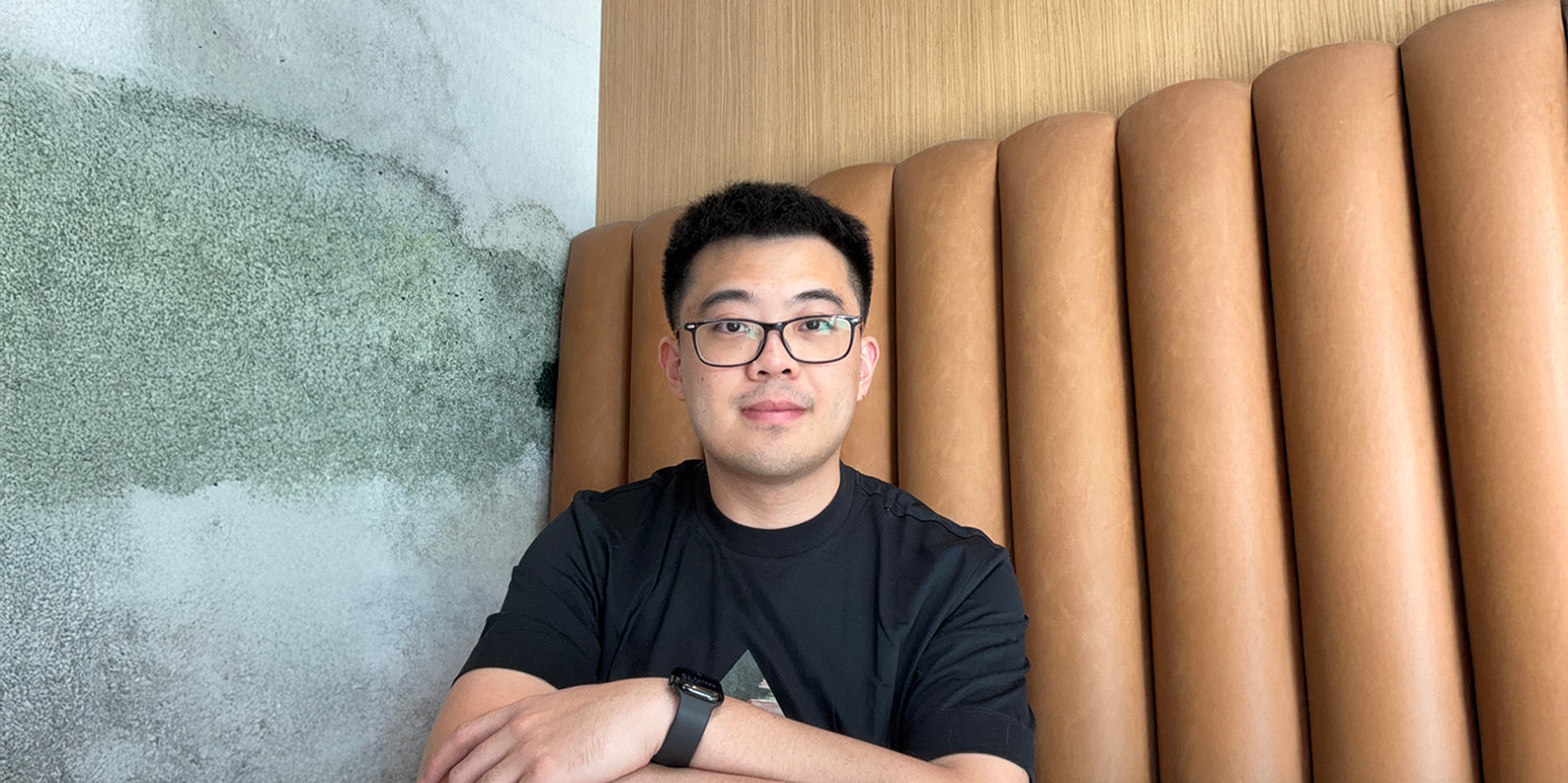
With a J.D. degree in hand and a career in law under way, Edward Wu, MPS ’25, had a kind of revelation. It was late 2022, and Edward, then practicing privacy and technology law for tech startups, was following word of a newly launched large language model (LLM) – ChatGPT.
The artificial intelligence (AI) wave was fast approaching, he suspected, and interdisciplinary professionals like him – combining skills and knowledge in law and computer science – were about to be in high demand across industries.
“I just realized that maybe it’s time for me to brush up on some computer science or information technology skills,” said Edward, who holds bachelor’s degrees in process engineering and computer science.
He turned to Cornell’s Master of Professional Studies program in information science.
“Cornell’s MPS in information science was the best fit because the program wasn’t just about technology; it was also about the broader impact of technology,” he said. “The program sets you up for success because you can build your own interdisciplinary curriculum from an extensive range of courses. This flexibility is the magic: it not only cultivates strong technical and programming skills but also opens pathways into fields like economics and public policy.”
Wu is currently a legal AI prompt engineer at Thomson Reuters, a company that’s been a go-to resource for legal professionals everywhere for more than a century. In recent years, the company has leveraged AI to make it easier for legal experts to search its vast, proprietary vault of case law, codes and statutes, legal templates, and much more. Edward and his team develop, maintain, and evaluate LLMs and agentic AI applications for Practical Law, the company’s online legal resource that provides practical legal know-how, templates, and checklists.
“My work really resembles the work I did with generative AI in my Cornell courses,” he said. “Cornell gave me the chance to explore these cutting-edge technologies, and I think the university is a leader in terms of integrating genAI into the teaching environment. Knowing how to use AI tools is critical in today’s workforce.”
The MPS in information science is a two- or three-semester program (students choose) that equips professionals with the technical expertise and leadership skills to thrive in the tech industry. MPS students arrive from different backgrounds and with diverse skill sets, from design, psychology, and economics, to art, law, and software engineering. Some join the program directly after completing undergraduate studies while others, like Edward, enroll after a few years in the workforce. With a flexible curriculum and hands-on projects with clients, the program has one aim: to give students the skills and experience they need to launch careers in information technology.
Edward cited the program’s flexibility as a key feature.