

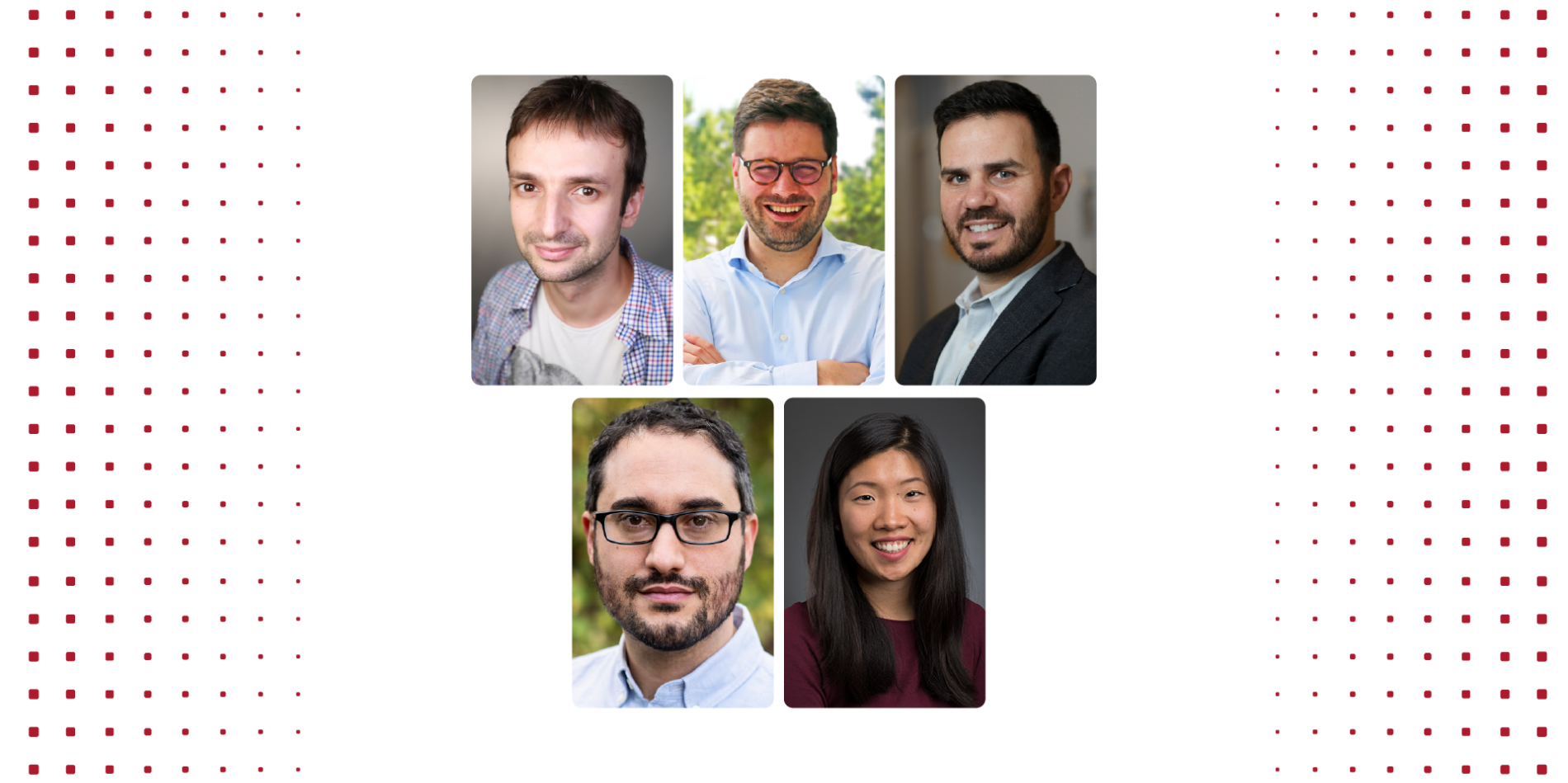
The Cornell Ann S. Bowers College of Computing and Information Science has hired five new faculty members this recruiting season.
Three of the new faculty will join the Department of Information Science; one will join the Department of Computer in Ithaca, and another will join the Department of Computer Science at Cornell Tech in New York City. The newest members of Cornell Bowers bring leadership in the areas of computer vision, generative AI for social good, the sociology of work, technology and society, natural language processing, and human-computer interaction.
“A hallmark of Cornell Bowers is our world-renowned faculty who encourage students to continually redefine what constitutes computing and information science,” said Thorsten Joachims, interim dean of Cornell Bowers. “The addition of these five new faculty members strengthen our college in key, strategic areas, like generative AI and computer vision, and we’re thrilled to welcome them to Bowers.”
Three of the five will begin teaching this fall: David Rand and Benjamin Shestakofsky, both based at Cornell’s Ithaca, NY, campus, and Andrew Owens, based at Cornell Tech in New York City. The five new hires are in addition to the four hired during last year’s recruiting season, who will begin this fall.
In other faculty news, two Cornell Bowers faculty members – Wen Sun, assistant professor of computer science, and Allison Koenecke, assistant professor of information science – will relocate from Cornell’s Ithaca campus to Cornell Tech.
Cornell Bowers celebrates the addition of these new faculty members:
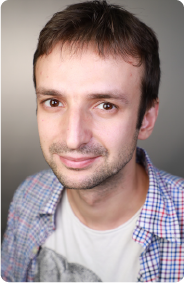
Sasha Golovnev, associate professor of computer science, beginning in 2026. Golovnev’s research interests include computational complexity, algorithms, pseudorandomness, learning theory, and cryptography. He is currently an assistant professor of computer science at Georgetown University and a visiting professor in the Centre for Quantum Technologies at the National University of Singapore. Previously, Golovnev was a research scientist at Columbia University and Yahoo Research, and a Rabin Postdoctoral Fellow at Harvard University. He received a Ph.D. in computer science from New York University in 2017.
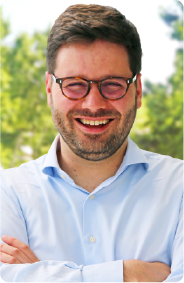
Andrew Owens ‘10, associate professor of computer science at Cornell Tech, beginning fall 2025. His research aims to create multimodal systems that learn to see, hear, and touch without human-labeled training data. Instead, these systems learn from co-occurring sensory signals, such as the correlations between the visual and audio streams of a video. His work has enabled applications that include producing soundtracks for silent videos, robotic manipulation with vision and touch, detecting AI-generated images, and generating visual illusions. Owens is a recipient of a Sloan Research Fellowship and an NSF CAREER Award. Prior to joining Cornell, he was an assistant professor at the University of Michigan and a postdoctoral scholar at the University of California, Berkeley. He received a Ph.D. in computer science from the Massachusetts Institute of Technology in 2016 and a B.A. in computer science from Cornell in 2010.
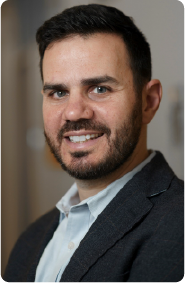
David Rand ‘04, professor of information science in Cornell Bowers and professor of marketing and management communications in the Samuel Curtis Johnson Graduate School of Management, beginning fall 2025. Rand uses computational social science to explore how dialogues between humans and generative AI models can be used to correct inaccurate beliefs, illuminate why people share inaccurate information online, understand political polarization, and promote human cooperation. He has published more than 200 articles in peer-reviewed journals such Nature, Science, PNAS, Psychological Science, CHI, and Management Science, and his work has received widespread media attention. David advises technology companies such as Google, Meta, and TikTok in their efforts to inform users. He has also written for popular press outlets including the New York Times, Wired, and New Scientist. Rand received his B.A. in computational biology from Cornell in 2004 and his Ph.D. in systems biology from Harvard University in 2009.
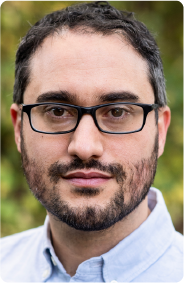
Benjamin Shestakofsky, a sociologist and assistant professor in the department of information science, beginning fall 2025. His research centers on the relationship between work, technology, organizations, and political economy in the age of AI. Shestakofsky's book, Behind the Startup: How Venture Capital Shapes Work, Innovation, and Inequality (University of California Press), investigates the role of financiers in shaping our technological future. Shestakofsky's work has been recognized with numerous awards from sections of the American Sociological Association, and has been supported by the Russell Sage Foundation, the W.E. Upjohn Foundation for Employment Research, and the Horowitz Foundation for Social Policy. His research and commentary have appeared in major media outlets including the New York Times, National Public Radio, and USA Today. He holds a Ph.D. in sociology from the University of California, Berkeley, and was previously an assistant professor of sociology at the University of Pennsylvania.
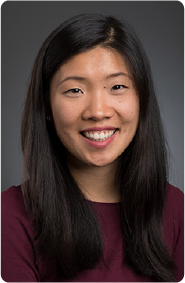
Kaitlyn Zhou, assistant professor of information science, beginning in 2026. Her contributions have been recognized at top-tier conferences in natural language processing and human computer interaction. She has received awards such as an NAACL Best Paper Runner-Up, an MIT EECS Rising Star, a Stanford graduate fellowship, and the College of Engineering Dean’s Medal. Her methods have been featured in high-profile news outlets like the New York Times and Wall Street Journal. She received her Ph.D. in computer science from Stanford University. Zhou has long advocated for increased access, inclusion, and equity in higher education and was appointed by the Washington State Governor to serve on the University of Washington Board of Regents.
Louis DiPietro is a writer for the Cornell Ann S. Bowers College of Computing and Information Science.