

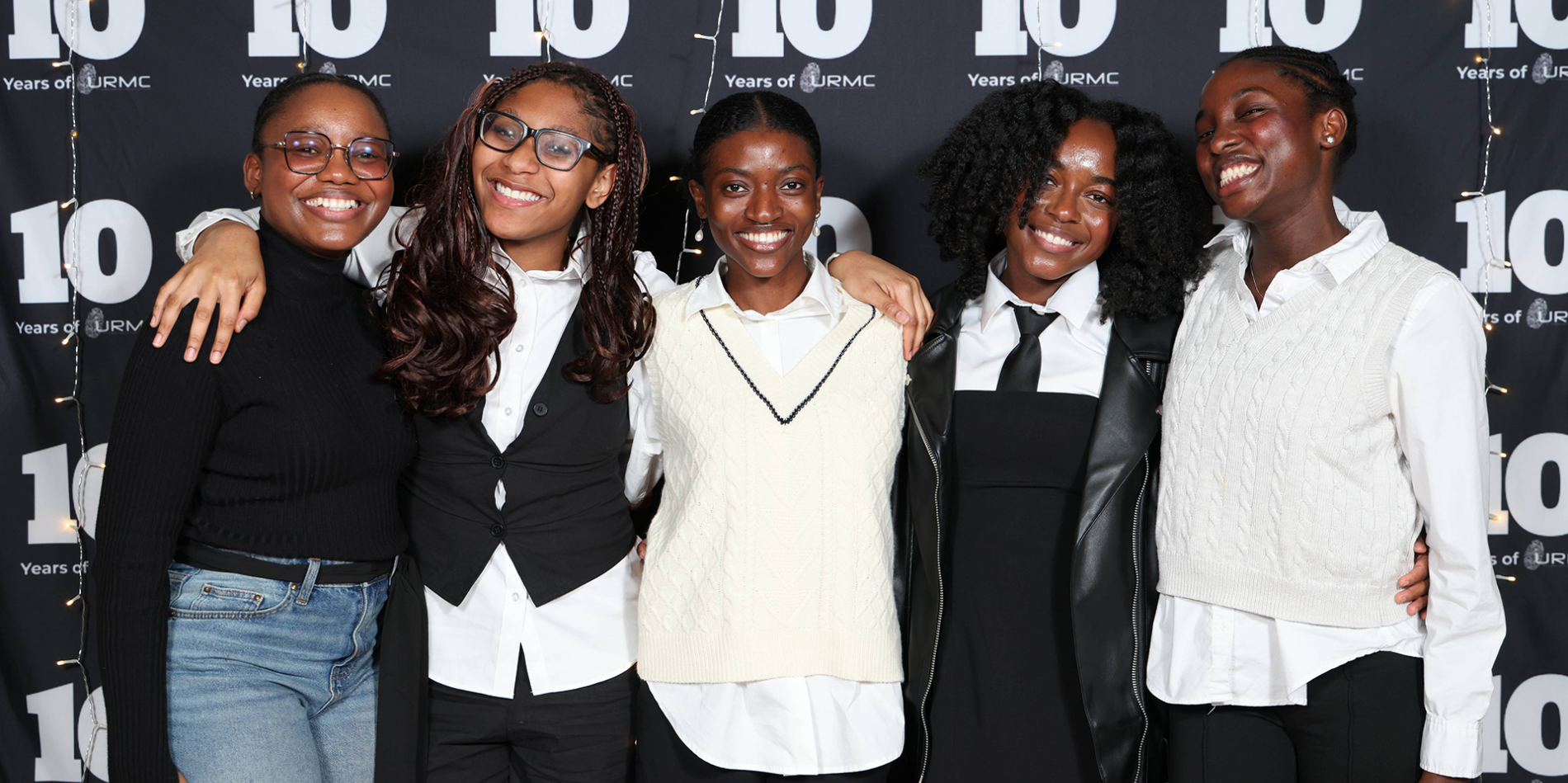
As an electrical and computer engineering (ECE) major fresh on the Cornell campus, Kaelem Bent ’27 was eager to find his community. “I had no connections,” he said. “Nobody.”
Lidya Bekele ’28, a computer science major, didn’t have much networking experience.
Tim Adeyemi ’27 hadn’t even planned to attend Cornell in the first place were it not for a chance Zoom call with an undergraduate and future mentor who wanted to share more about Cornell and an impactful computing group he might be interested in.
Like hundreds of Cornellians before them, all three students ultimately found community and mentorship in Underrepresented Minorities in Computing (URMC) – a student-run group based in the Cornell Ann S. Bowers College of Computing and Information Science that exists to support, empower, and develop young computing innovators into professional heavyweights and changemakers.
“Almost every opportunity I’ve gotten has basically been through URMC,” said Adeyemi, a computer science major and past URMC co-vice president whose group connections helped him land previous internships at Microsoft and Meta. “It’s been an amazing experience overall.”
This year marks URMC’s 10th anniversary, and its student leaders, members, alumni, and faculty mentors celebrated on Saturday, March 14 with a networking kick-off event in the Computing and Information Science Building followed by a dinner, panels, and performances in G10 Biotechnology.
“This organization has created a space where students can find mentorship, encouragement, opportunities, and a sense of belonging – often at the moments when it matters most,” said Sorin Lerner, dean of Cornell Bowers, to the roughly 135 in attendance at the celebratory dinner. “You lift one another up. You create opportunities. You make this college stronger.”
Encouragement and community
While URMC has helped elevate Black, Latinx, and Indigenous students, it’s open to all and has no formal membership process beyond showing up to one of the group’s monthly events. Its mission is to offer academic support, community building, and professional development. They meet up to receive help on courses, hear guidance on their academic paths, improve resumes, and leverage Cornell connections to land internships and jobs. With support from Cornell Bowers, URMC also hosts trips to major tech conferences that celebrate diversity in computing, like Tapia and AfroTech.
“URMC opened up my network so much,” said Bekele, who serves as URMC’s corporate chair. “It’s been so integral to my professional and academic development here. Without URMC, I wouldn’t be where I am now.”
Beyond providing professional know-how, championing each other and giving moral support are also foundational, members said. During her time at Cornell, Sofia Carrillo ’19 leaned on the URMC community as an undergraduate Latinx student considering the computer science major.
“It was simply hearing, ‘Yeah, I know this is hard.’ It was about encouragement and community,” said Carrillo, who would serve as group co-president in 2018 and attended Tapia twice with URMC. “It was conversations like ‘Hey, you’re Mexican. I’m Mexican. There’s two of us here, and we don’t have to feel like we’re the only people in this class with our lived experience.’”
After earning a bachelor’s in computer science, Carrillo is now a software engineer at a company that found her through the Tapia student resume database.
“From the start, URMC was an amazing, supportive community and was great to watch as it grew over the years,” said Éva Tardos, the Jacob Gould Schurman Professor of Computer Science and faculty advisor to URMC since its inception. “I am happy I could play a part in supporting the community and its growth as an advisor.”
Along with Tardos, Hakim Weatherspoon, professor of computer science and associate dean for Belonging at Bowers, serves as URMC faculty advisor, and LeeAnn Roberts, director of Belonging at Bowers, serves as staff advisor.
"URMC's impact extends beyond student support. In collaboration with our office, it has helped cultivate a stronger sense of belonging for faculty, staff, and students alike,” Roberts said. "From the moment I arrived, URMC welcomed me with open arms, and that spirit of community has continued to influence how we create connection, care, and support across Cornell Bowers.
Humble beginnings and the URMC Legacy
Ten years ago, URMC cofounder Kevin Chavez ’17 was an international student from Mexico studying computer science. He had friends, but not many that shared his heritage, he said.
“I feel like I didn't see a lot of people like me in my classes, in the major, and just my circles, and I knew they were out there,” Chavez said. “I knew I just had to find them.”
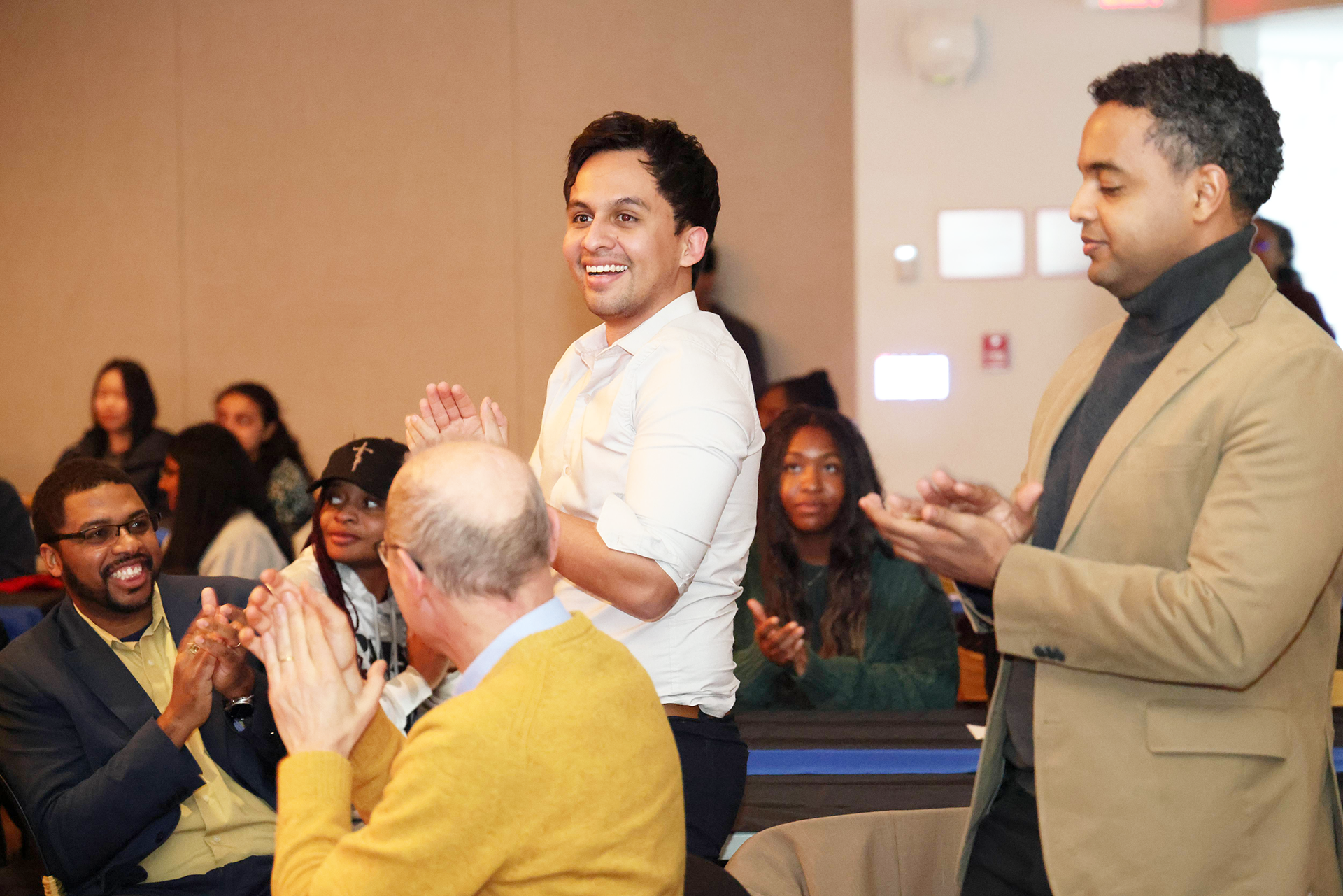
Around that same time, Yordanos Goshu ’18 had changed majors from chemistry to computer science and was struggling academically.
“Getting through the department and the major is really hard to do without a community,” said Goshu, who cites Fabian Okeke, Ph.D. ‘19, a doctoral student in information science at the time, for encouraging him to stick with the major.
Goshu met Chavez through a mutual friend, and together they shared a vision for a new organization to support and elevate computer students like them, from other cultures and with different backgrounds. With support from Cornell Bowers leadership, URMC was born.
Three people showed up to the first general meeting or “G-body.” Today, URMC has more than 150 members and countless alumni, and receives support from nearly a dozen corporate sponsors, including LinkedIn, Jane Street, Visa, Bloomberg, HRT, and Accenture.
In URMC’s fledgling years, Goshu noticed it became a community for the “geniuses” too, the ones who breezed through coursework but needed a pat on the back or an ear during hard times outside the classroom.
“The hardships some students hit weren’t academic, but there were other social components to the college experience that made a group like URMC super helpful,” said Goshu, who works for a quantitative hedge fund on the East Coast.
For Chavez, URMC is one of his proudest achievements from his time at Cornell.
“The degree, the courses, and experiences were really meaningful and great,” said Chavez, who works remotely from Guadalajara as a programmer for Scale AI. “But it was also great to feel like I left something at Cornell that would stay around longer than I would.”
That legacy of giving back remains central to URMC, said Bent, the ECE major once in search of community at Cornell and who is now URMC co-president.
“Passing on the wealth in our community is very important to us. If one of us gets an opportunity at a company, let’s try to do an event together. Let’s send a recruiter over. Let’s try to get a URMC pipeline into that company,” Bent said. “Those connections are important, and we want to build as many as possible with future generations in mind.”
For the latest from URMC, see its Instagram page.
Louis DiPietro is a writer for the Cornell Ann S. Bowers College of Computing and Information Science.