

At the height of the COVID-19 pandemic, players flocked to Axie Infinity, a blockchain-based video game where users received cryptocurrency tokens for their time spent playing. In 2022, when the broader crypto market crashed and a massive hack erased players' earnings, most users fled. A new study by Cornell researchers investigated why some players stuck around.
By combing through social media posts on the Axie Infinity subreddit and the blogging platform Medium, Jordan Ali, a doctoral student in the field of information science, worked with Gili Vidan, assistant professor of information science in the Cornell Ann S. Bowers College of Computing and Information Science, to document the rise and fall of Axie Infinity. They found that most players weren't purely victims of the game, but participants who strategized to overcome challenges and protect their investment.
“Axie Infinity was one of the most, if not the most popular NFT [non-fungible token] play-to-earn video games that came out around the time of the pandemic," said Ali. "It's still in operation today, albeit in a far different form.”
Their study, "Playing, Earning, Crashing, and Grinding: Axie Infinity and Growth Crises in the Web3 Economy," published July 21 in the journal Big Data & Society.
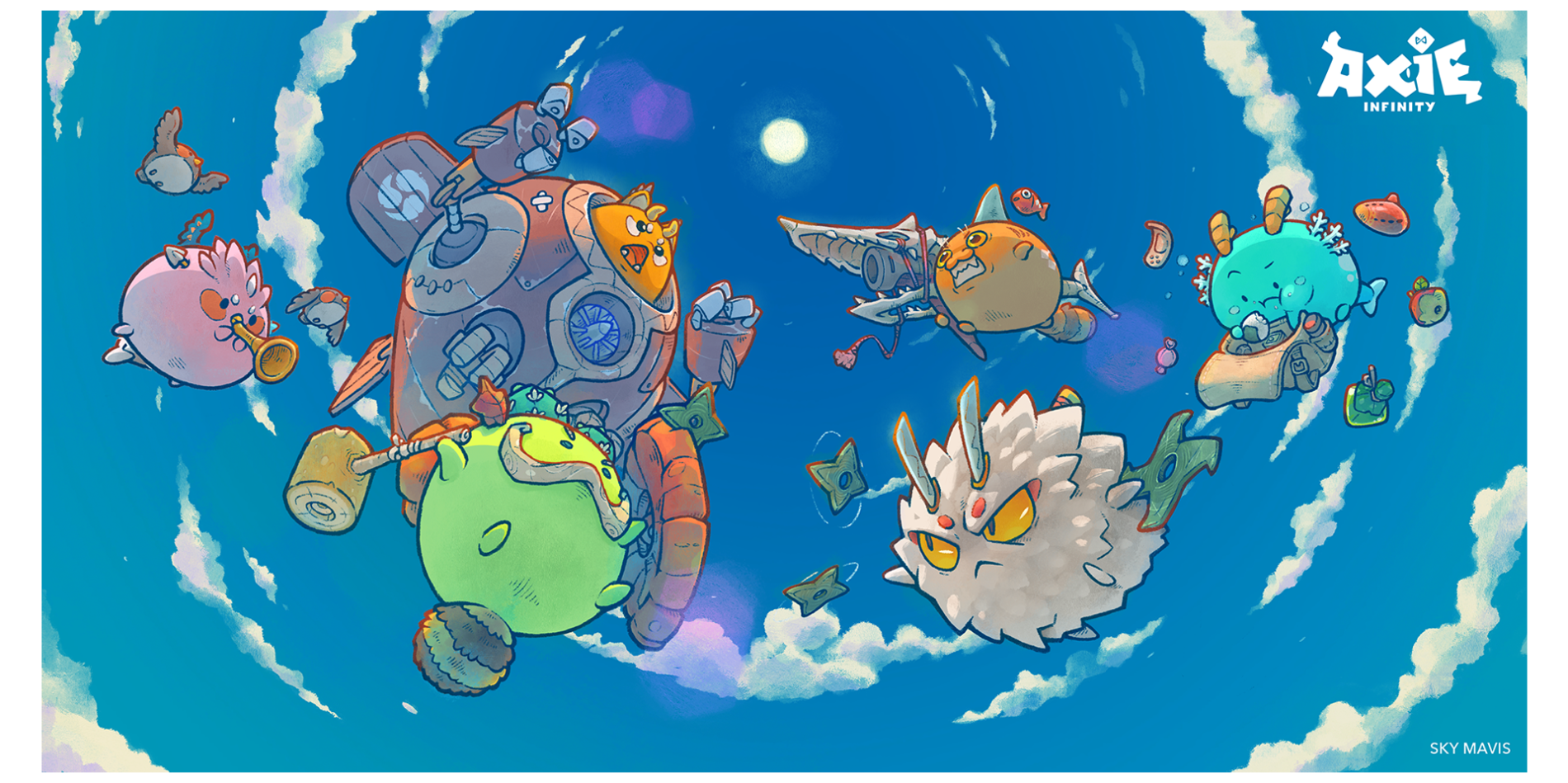
To play Axie Infinity, users purchase NFTs – unique identifiers recorded on a blockchain ledger – called “axies,” which are cute digital creatures inspired by axolotls. Players can then breed and trade their axies and enter them into fights. For playing, they receive in-game tokens linked to the cryptocurrency Ethereum, which can be periodically cashed out.
As people looked for ways to earn an income remotely during the pandemic, the game's user base skyrocketed. The larger cryptocurrency market was also booming at that time, and players quickly recouped their initial investment. The game was especially popular in the Philippines, where some 30,000 players joined – for some, it was their main source of income, researchers said.
Many scholars have criticized Axie Infinity as a Ponzi scheme because the game requires new players to grow the market for its tokens. But the developer, Sky Mavis, had an additional goal of advancing Web3 – a vision for the next iteration of the internet, where blockchain technology enables users to control their own data and assets in a decentralized, community-run system. Advocates of Web3 see it as a response to the current version of the internet, Web2.0, where users are primarily content creators for platforms owned and controlled by big tech companies.
In theory, Web3 just needs a "killer app" to get enough users on board to make it viable. In the white paper on its website, Sky Mavis presented the game as a "revolution" that "could onboard the world to Web3," by delivering "property rights to all users of the internet, starting with gamers."
"The developers of Axie infinity were looking to see, how could there be another way to get people involved in the crypto space that wouldn't necessarily be there otherwise?” Ali said.
When the value of Ethereum soared, the cost of the game's initial NFTs rose from about $5 to $1,000. To keep the flow of new players coming, many existing players started scholarship programs where they would lend NFTs to new users for a cut of their earnings. These "managers" posted videos on YouTube and Twitch, coaching new players on the best gaming strategies.
But in the summer of 2022, disaster struck. Hackers from North Korea stole the equivalent of $620 million U.S. dollars in cryptocurrency from the game. At the time, it was the largest crypto hack ever.
At the same time, the wider crypto market crashed, leaving players with useless tokens. Players fled and the number of new players plateaued. Users began talking openly about how unfun the game was and how they had only been "playing" for the money. Instead of cutting their losses, a number of players stayed to keep earning, hoping their game tokens would one day rebound so they could cash out.
Rather than seeing these players as dupes, Ali and Vidan see them as people who were aware that the game was a financially risky proposition, but took responsibility to manage that risk.
Today, Axie Infinity's user base has dropped about 90% from its peak but still has about 400,000 regular users, Ali said. Its contribution to the vision of Web3 also lives on. Many games and Web3 projects have copied large sections of the Sky Mavis white paper, and the company just made new updates.
Ali and Vidan see the saga of Axie Infinity as emblematic of the wider vision for Web3. The game's persistence suggests that the dream of a collective, decentralized internet is alive and well.
"Decentralization still holds a lot of power, rhetorically and politically," Vidan said. "Despite all the ways that the game falls short of the promise of giving a return on investment to the average player, there's something very appealing to it.”
Patricia Waldron is a writer for the Cornell Ann S. Bowers College of Computing and Information Science.