By Louis DiPietro and Patricia Waldron
On


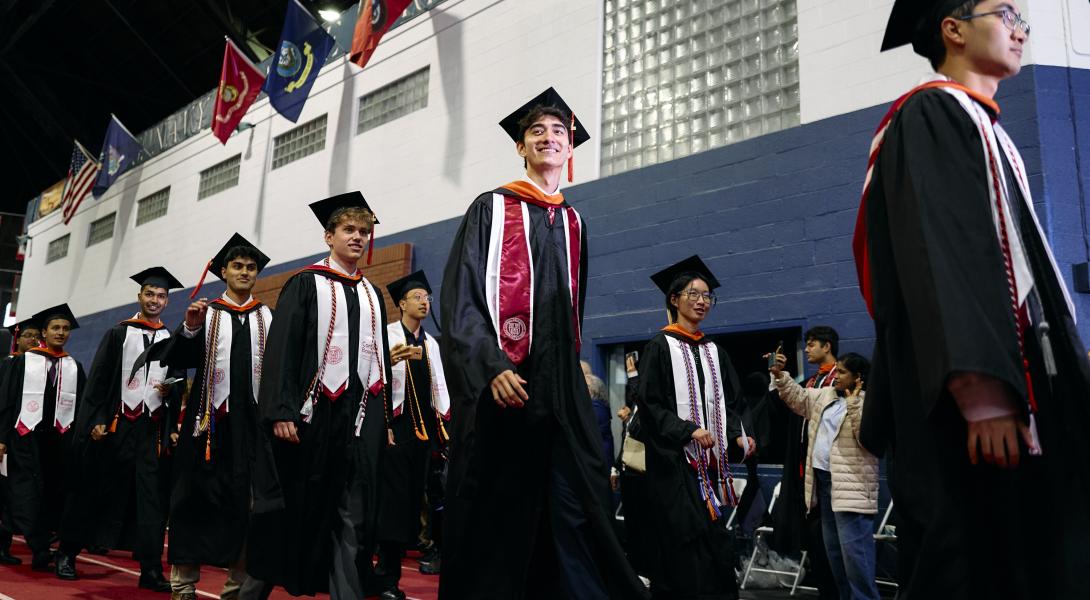
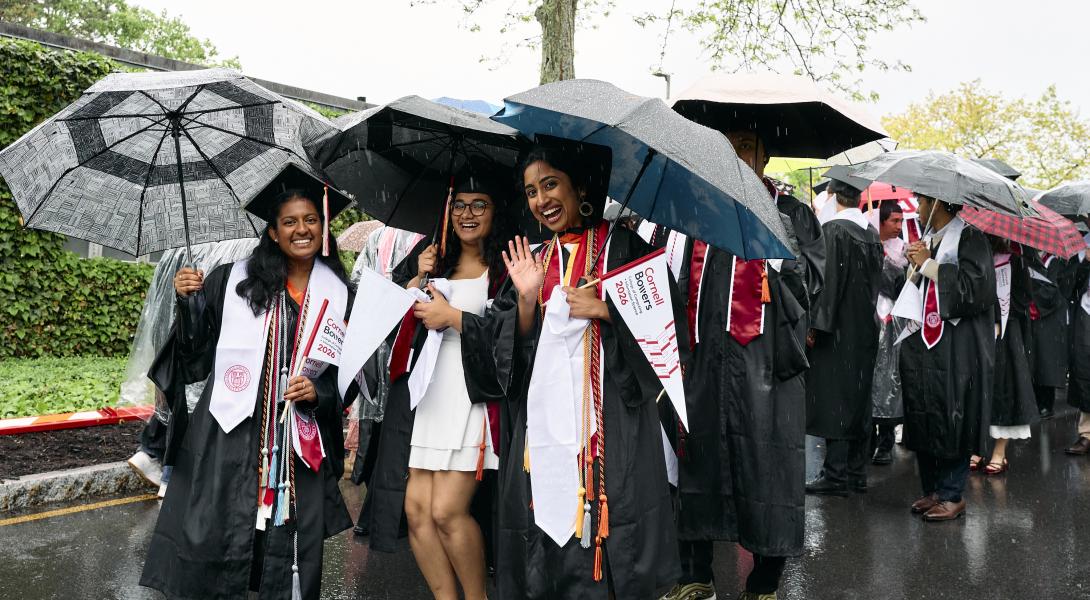
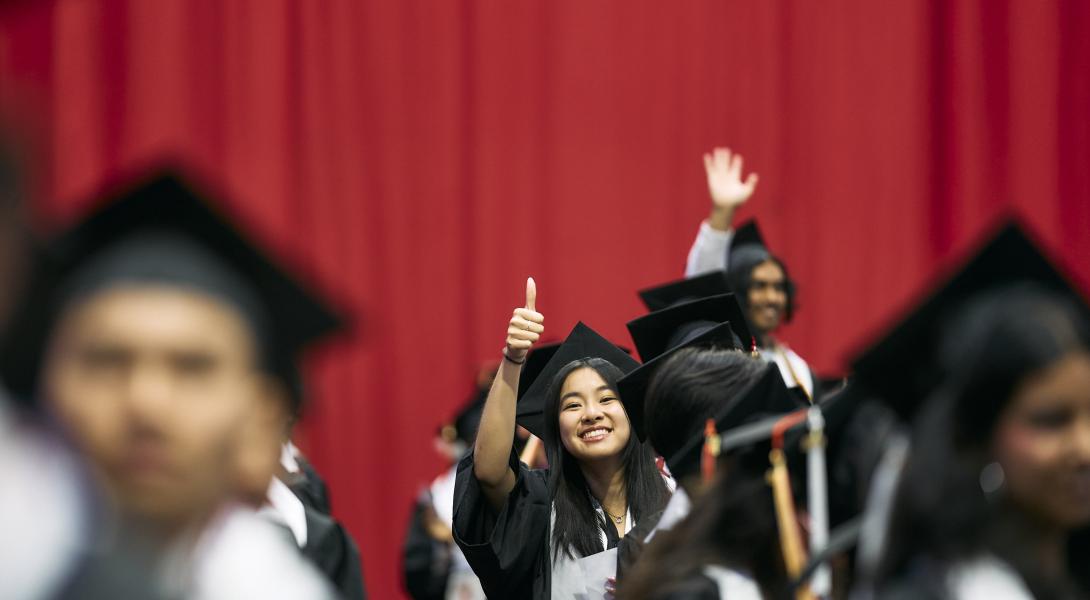
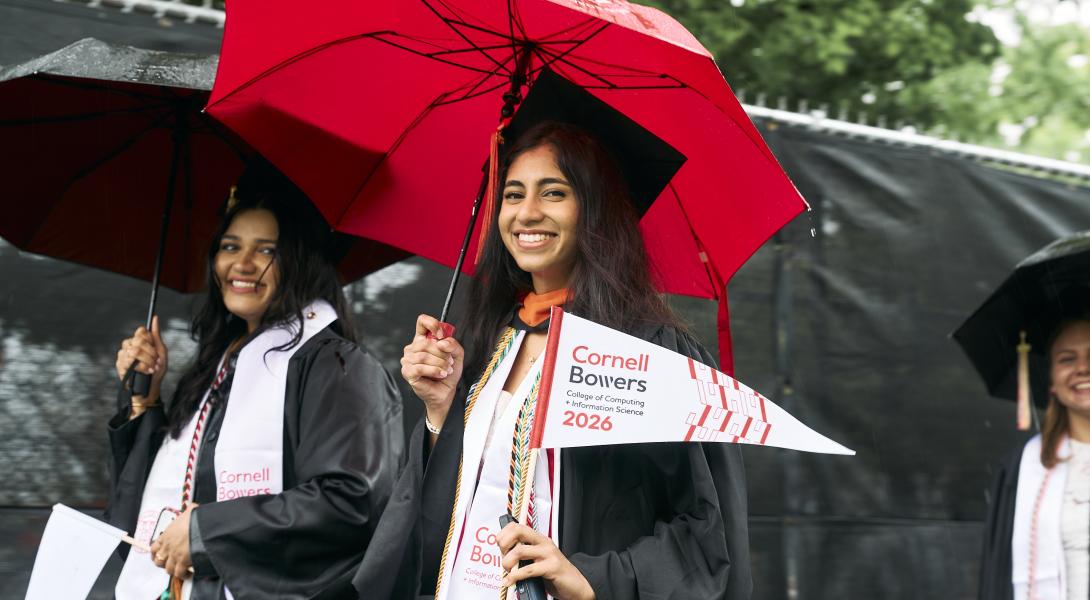
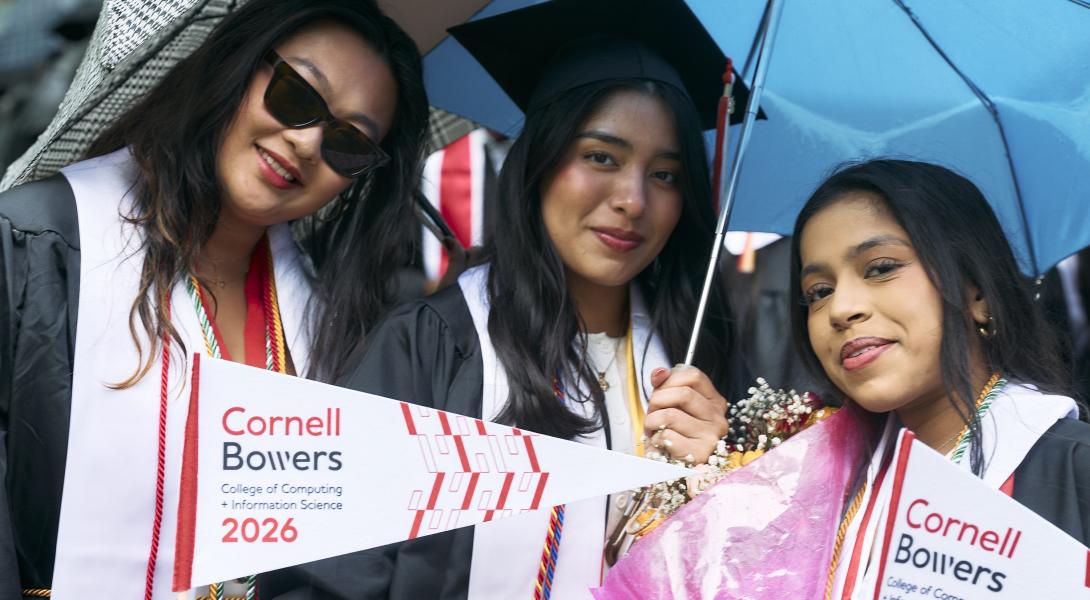
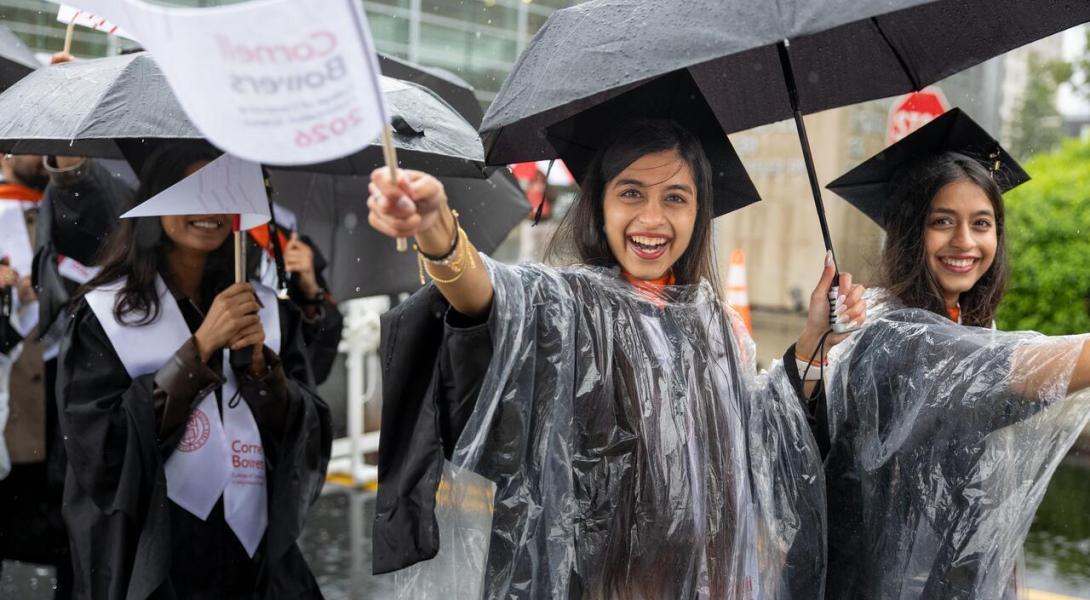
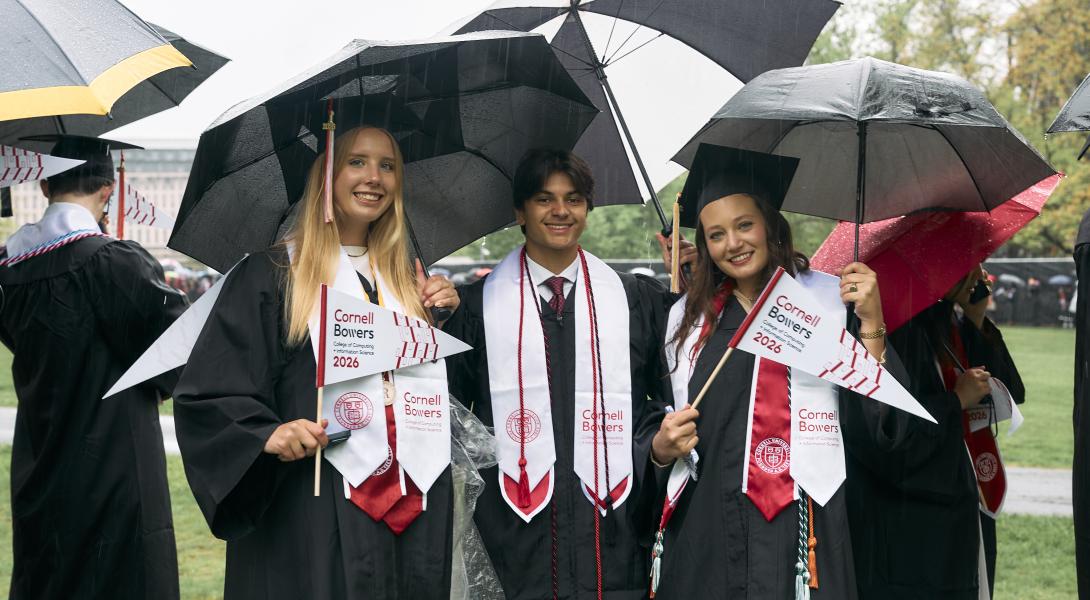
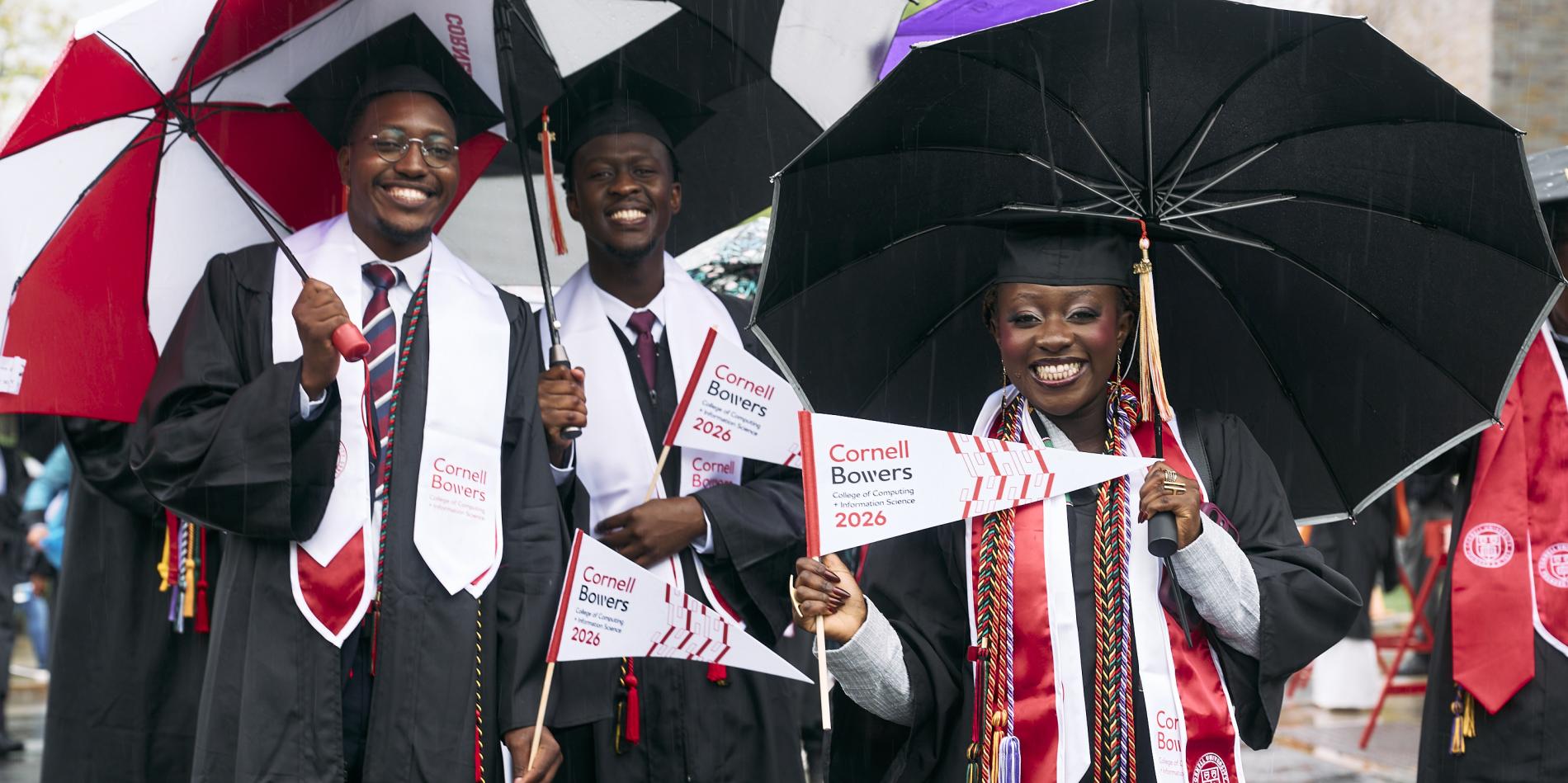
With eyes toward an uncharted, artificial intelligence-enabled future, 1,300 graduates from the Cornell Ann S. Bowers College of Computing and Information Science’s class of 2026 were encouraged to pen new maps during the department recognition ceremonies held Friday, May 22 and Saturday, May 23 in Barton Hall.

Speaking at the recognition ceremonies for the first time as the dean of Cornell Bowers, Sorin Lerner acknowledged the uncertainty around AI and its impact, framing AI’s rise as a moment for Bowers graduates to seize.

“You are graduating into a moment when almost nothing is settled. This is the best possible news: the map is being redrawn, and you are holding the pen,” Lerner said. 

Cornell Bowers’ recognition ceremonies are held each year in Barton Hall during Commencement weekend, when graduates formally accept their degrees. The ceremonies are opportunities for each of Cornell Bowers’ three departments – computer science, information science, and statistics and data science – to honor their graduates from December 2025, May 2026, and August 2026. 

“Building something is certainly glamorous. But maintenance is how things actually stay alive. This is true of codebases, bridges, friendships, and you,” Lerner said. “Say ‘I don't know.’ Then go find out. This single habit will outperform almost every credential you have just earned.” 
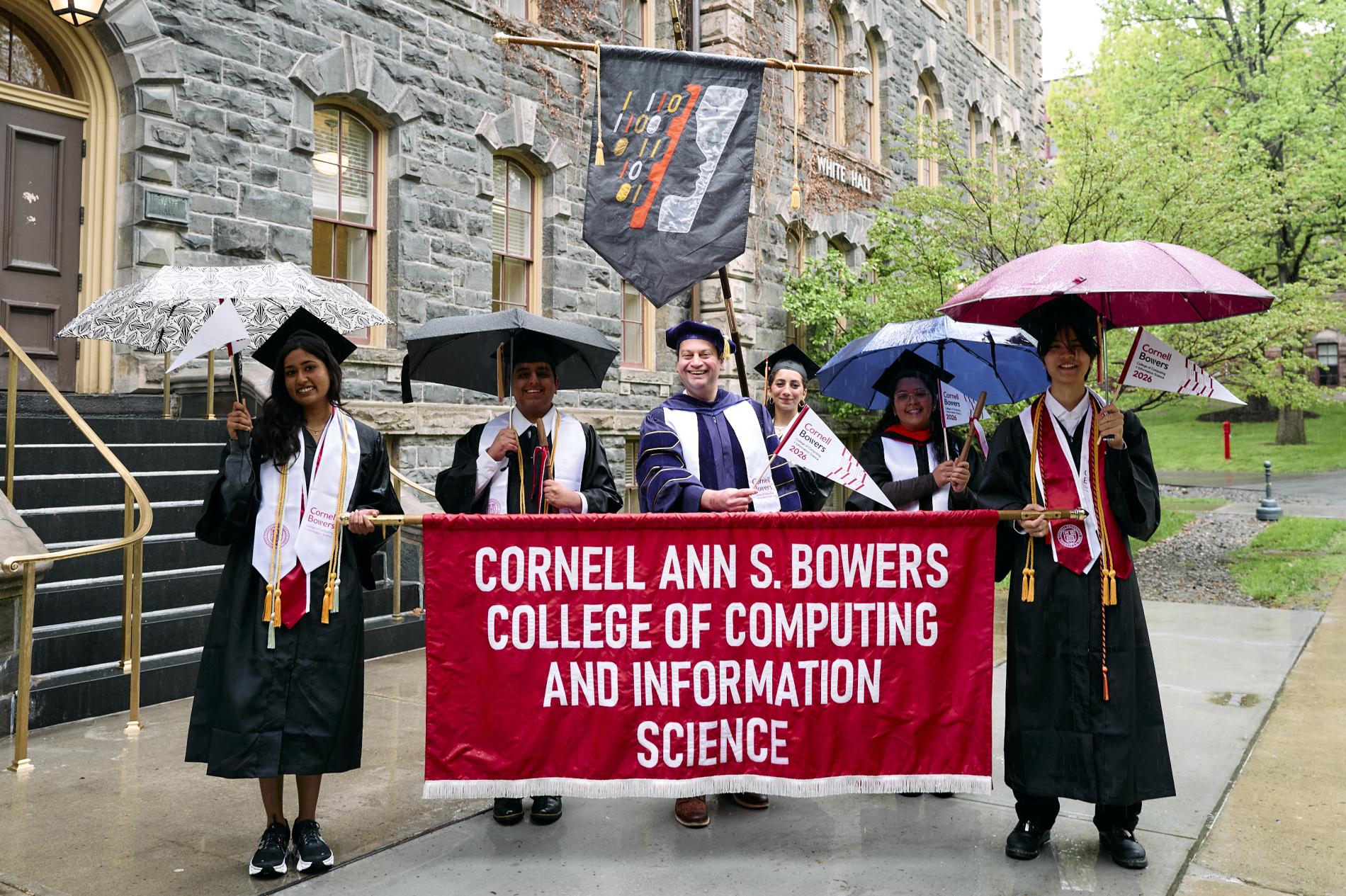
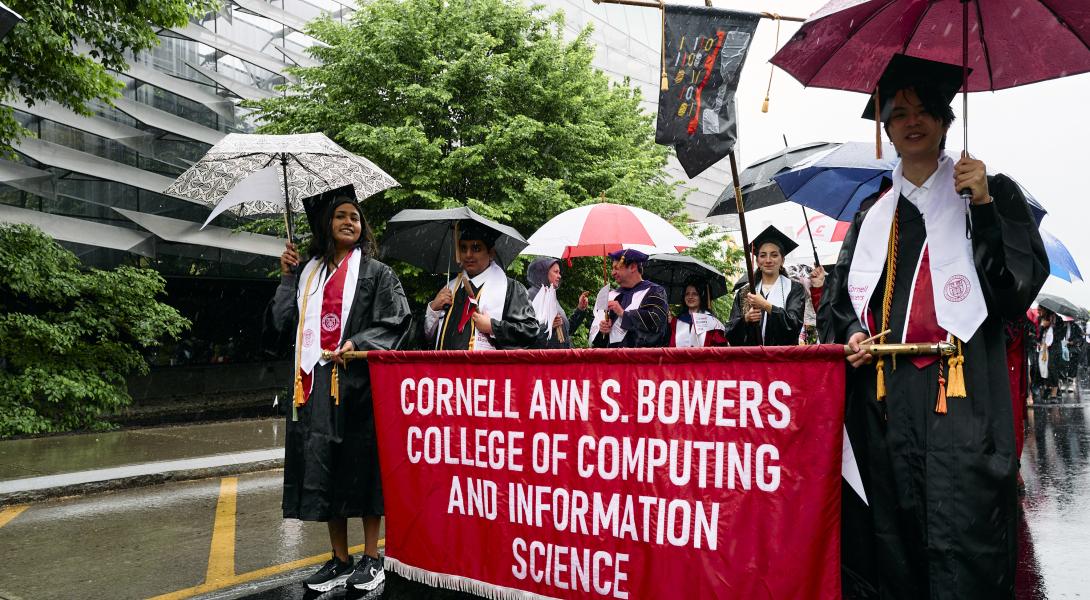
graduates stand behind the red bowers commencement banner
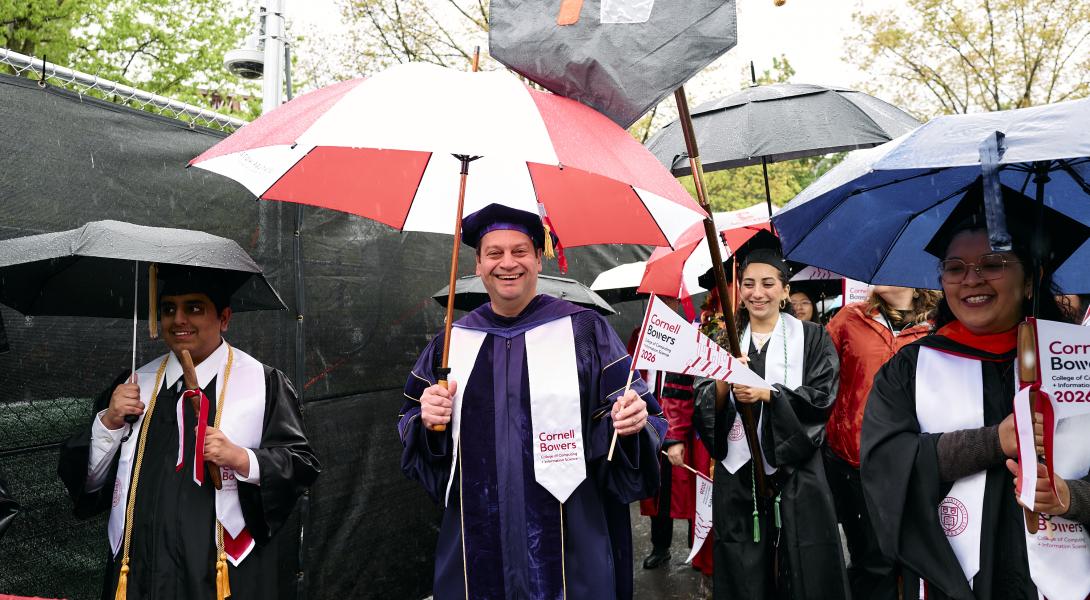
Degree marshalls and Dean Lerner prepare for the university procession.
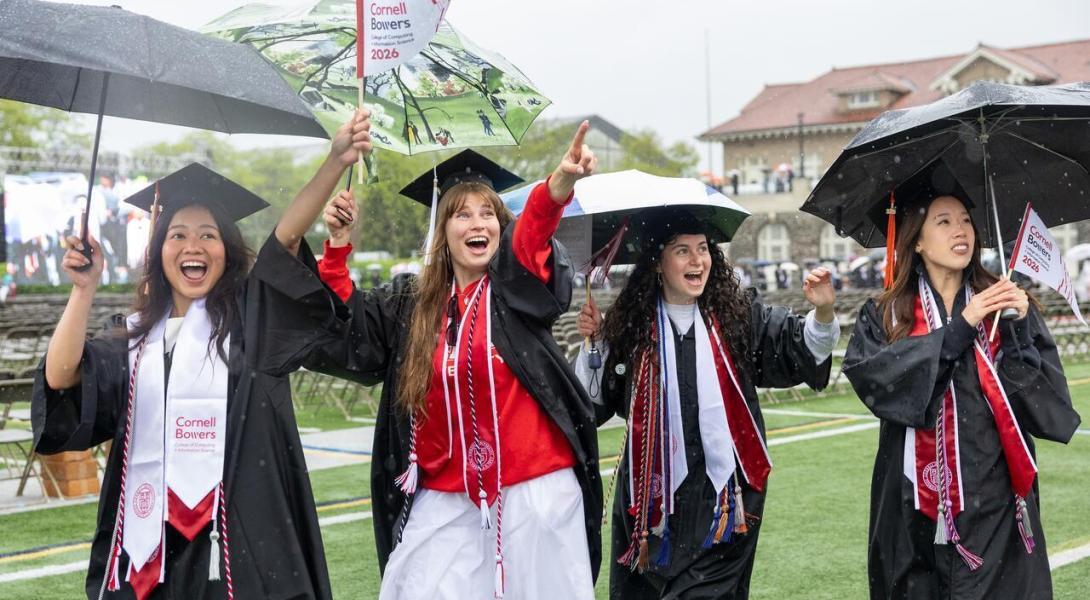
The following Cornell Bowers graduates were named procession honorees and led the college procession during Commencement ceremonies in Schoellkopf Field on Saturday, May 23. 

  • Maria Susana Chang Vegas ‘26, MPS in Information Science, and Shubham Mohole ‘26, a computer science major, served as degree marshalls
  • Anisha Tehim ‘26, a statistics and biometry major, and Rei Meguro ‘26, MEng in computer science, served as banner bearers
  • Maryam Albakry ‘26, an information science major, was the symbol banner bearer

Statistics and Data Science

“The work of our graduating students reflects the diversity of our subject and its interdisciplinary nature,” said James Booth, department chair and professor of statistics and data science, in his remarks to 130 graduates at the department’s recognition ceremony on Friday, May 22.

This weekend’s Commencement activities represent a beginning for the class of 2026, he said. 

“Remember to embrace new challenges, continue learning, and pursue your passions,” Booth said. “As ambassadors of statistical science, your skills will influence how our data-driven society responds to current and future challenges.

Select students from the Master of Professional Studies in Data Science and Applied Statistics program were recognized with awards associated with the MPS Project Practicum, a semester-long course where student teams worked alongside client companies to build implementable solutions:

  • Project Leadership Award: Candy Wu ‘26 (Team 10) and Shashwat Modi ‘26 (Team 8)
  • Client Communication Award: Jinyu Liao ‘26 (Team 1);  Zhiyu Wang ‘25 (Team 1); Yiyou Jin ‘26 (Team 2); Mingyu Li ‘26 (Team 4); Mengqi Shi ‘26 (Team 9); Xinyu Song ‘26 (Team 11); Pranav Damal ‘26 (Team 11); Ariel Sheynzon ‘26 (Team 12); Andrew Chung ‘26 (Team 12), and Dimitrios Nerantzinis ‘26 (Team 13)
  • Best Project Award:
    • Pranav Damal ‘26, Yulei Ma ‘26, Xinyu Song ‘26, Liyi Wu ‘26, and Hanwen Zhang ‘26 (Team 11) – "Is Rock Dead? A Survival Analysis of Grammy Nominees" with an individual sponsor
    • Hansini Rajesh ‘26, Jingqi Yang ‘26, Yuxin Yang ‘26, Ziyu Yu ‘26, and Lanjia Yuan ‘26 (Team 5) – “Panel Projection Modeling” with the Centers for Disease Control and Prevention (CDC)

Graduates ready to meet the moment.

You are graduating into a moment when almost nothing is settled. This is the best possible news: the map is being redrawn, and you are holding the pen.

Sorin Lerner
Dean

Information Science

David Mimno, professor and chair of information science, said information science students are built to thrive in times of uncertainty, like the current one brought on by “a dynamic and uncertain technology” like AI.

“People who thrive in uncertain environments are the ones who have lots of flexible skills, a broad perspective, and the ability to pivot. This is exactly the goal of Cornell Information Science,” Mimno told the nearly 400 graduates. 

“A Cornell IS [information science] grad knows how to read a legal brief, and interpret regression coefficients. They know how to think in terms of networks and emergent properties, and how to design a user interaction,” he said. “When computation intersects people and society, an IS graduate is there, assessing the situation, bringing together multiple tools, and imagining a solution that has never been tried before.”

Tracy Mitrano, distinguished visiting professor of information science, was voted by graduates to give the faculty keynote and offered graduates three pieces of advice: Orient your lives around goals like curiosity, compassion, and courage, which transcend conventional measures of success like job titles and salaries; live the American dream, not just in upward mobility but in service, and read history.

“History does not inspire envy in the same way tech jobs do. But history, like the humanities more broadly, teaches you invaluable lessons about people,” said Mitrano, who twice ran for New York’s 23rd Congressional District, in 2018 and 2020. “History gives meaning to life by showing us what it means to be human.

“The path I wish for all of you is to dive deep for your virtues, actively participate in your community, and develop a life-long sense of shared humanity.”

Two graduates were recognized for excellence:

  • Tomas Siurna, MPS '26, received the MPS Excellence Award
  • Maryam Albakry '26 received the Information Science Student Excellence Award

Computer Science

The Department of Computer Science welcomed more than 500 undergraduates and almost 250 graduate students to the ranks of its alumni in a ceremony held Saturday, May 23.

In his remarks, Lorenzo Alvisi, M.S. ’94, Ph.D. ’96, the Tisch University Professor in Computer Science and chair of the Department of Computer Science, spoke to the new graduates' excitement and uncertainties around employment in the age of AI. 

"We have taught you what is both timeless and timely," he said. "Because Cornell has given you not just knowledge, but curiosity and judgment,you are poised to be empowered, not replaced, by today’s and tomorrow’s technologies."

Alvisi also encouraged them to use their opportunities for the greater good.

"Because someone has to decide what gets built, what gets trusted, what gets deployed – and what doesn’t," he said. "Someone has to ask, not just can we do this, but should we?"

Michael Clarkson, Steven H. Weiss Provost’s Teaching Fellow, teaching professor and director of undergraduate studies in computer science, recognized the hard work of the past and present board members of the computer science undergraduate student groups. Clarkson also announced the following undergraduate senior award recipients:

  • Tuni Le '26, the Alan S. Marx Prize for Excellence in Undergraduate Teaching Support
  • Alexander Kozik '25, the Jonathan E. Marx Memorial Senior Prize
  • Shriya Sudhakar '26, the Jonathan E. Marx Memorial Senior Prize
  • Owen Oertell '26, Computer Science Prize for Academic Excellence

After the ceremony, Alvisi sent the graduates into the world with well wishes, saying, "congratulations and Godspeed!"

Read graduate stories.