Scarborough Professor of Social Science; Economics, Information Science, Information Science Field Faculty
Areas of Interest: Economics of information; learning from endogenous data; market microstructure; evolution in games and markets
Office: 450 Uris Hall; 213 Gates Hall


About
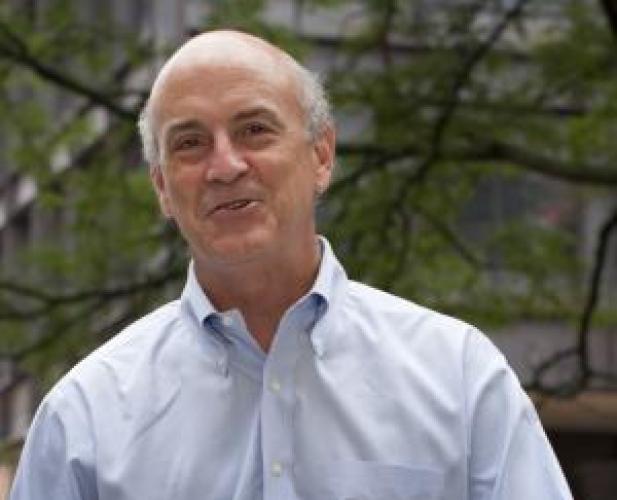
David Easley is the Henry Scarborough Professor of Social Science and is a Professor of Information Science at Cornell University. His research is in the fields of economics, finance and networks. In economics, he and Lawrence Blume work on learning and wealth dynamics. In finance, his work with Maureen O'Hara focuses on market microstructure and asset pricing. In networks, he works with colleagues in the Computer Science department on trading networks and network formation.
Professor Easley recently announced a new measure developed with Cornell colleague Maureen O'Hara and Marcos Lopez de Prado of Tudor Investment Corporation that may be useful in preventing a "flash crash" similar to what happened in May 2010 when the stock market briefly erased almost $1 trillion in value and plunged the Dow Jones Industrial Average into its biggest intraday fall ever. The new volume-synchronized probability of informed trading (VPIN) metric is based on the imbalance of trade relative to the total volume. It identifies flow toxicity, which has been the primary topic of Easley and O'Hara's research over the last 20 years.
Professor Easley and Professor Jon Kleinberg, Computer Science at Cornell, recently co-authored Networks, Crowds and Markets: Reasoning About a Highly Connected World. The book is based on the popular undergraduate course, Networks, which they developed at Cornell. It combines different scientific perspectives in its approach to understanding networks and behavior in networked environments. Drawing on ideas from economics, sociology, computing and information science, and applied mathematics, the book describes the emerging field of study that is growing at the interface of all these areas, addressing fundamental questions about how the social, economic, and technological worlds are connected.
Research Website
Research areas
Network Science
Econometrics
Location
Gates Hall 213
Profile Type
Faculty (Emeritus)
Information Science